Be the Business That Shows Up When Things Go Wrong
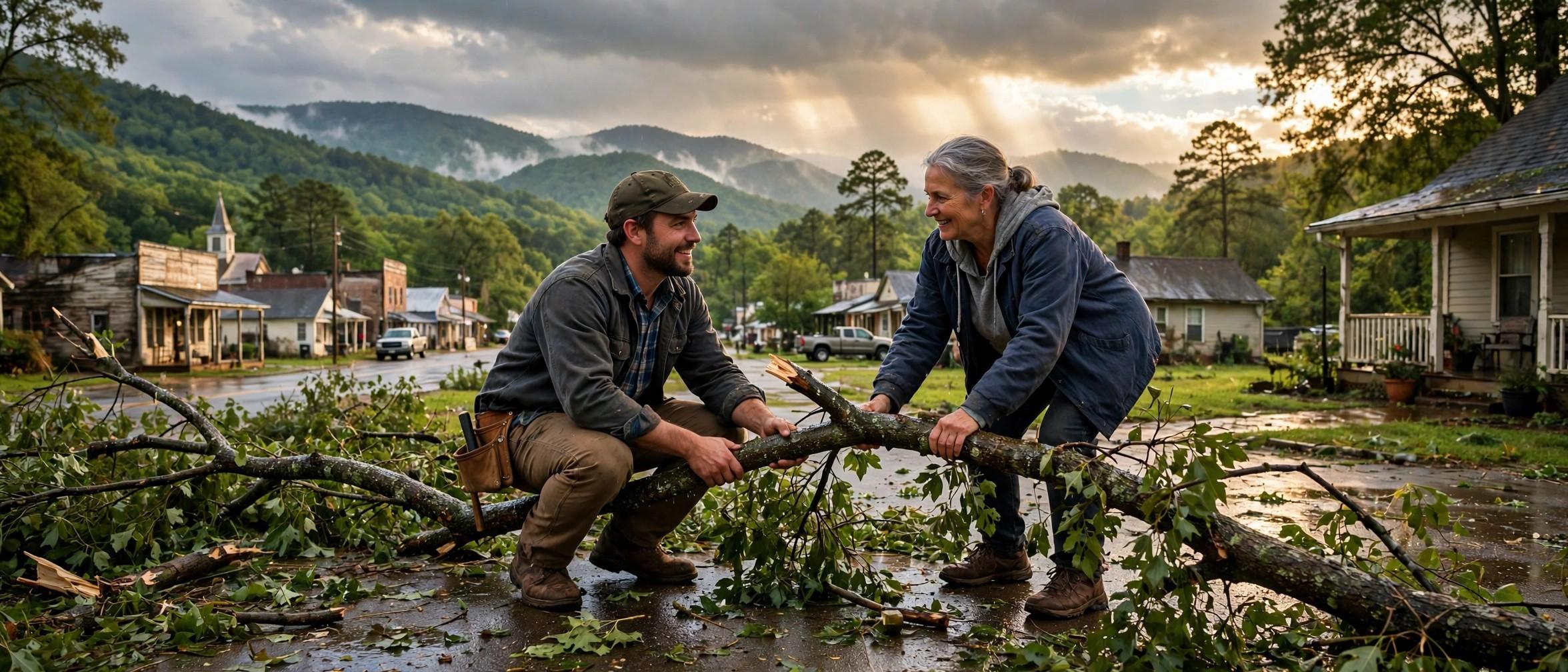
Every town has a story about the night the storm came through. Trees down, power out, water where water shouldn't be. And in every one of those stories, there's a business somebody remembers — not because it ran an ad, but because it showed up. The roofer who answered his phone at 10 PM. The electrician who drove over just to look. The neighbor with the chainsaw who cleared the driveway before anybody asked. Nobody forgets that. And nobody forgets who didn't pick up, either.
Hard days are when a local business earns its reputation — or loses it. The rest of the year you're competing on price and reviews and who shows up first on Google. But when something goes wrong, all of that goes out the window. People just want somebody who cares enough to show up. That's not a marketing campaign. It's who you are when it counts.
People remember who showed up
Think about the last time something went wrong at your house. A pipe burst, the heat quit on the coldest night of the year, a tree came down across the driveway. Who did you call? You didn't scroll through ads. You called the person you'd heard about — the one your neighbor said "showed up the same night" when their basement flooded.
That's the kind of reputation no ad can buy. It gets told at ball games and church suppers and in Facebook groups, and it sticks for years. One hard night, handled right, turns into a story your customers tell for you. And one hard night handled badly — no answer, no callback, a shrug — turns into a story too. The town talks either way. You just get to pick which story it tells.
You don't have to be the hero — just be reachable
Showing up doesn't mean you have to fix everything yourself at midnight. It means you answer. A real person, or at least a real callback, beats a voicemail box every single time.
When the storm hits or the cold snap comes, your phone is going to ring. The businesses that win those calls aren't always the biggest ones. They're the ones with a plan: the phone gets answered, somebody writes down the address, and somebody calls back with a straight answer — even if the answer is "I can't get there tonight, but here's what to do until morning, and I'll be there first thing."
That callback costs you two minutes. It buys you a customer for years, because in the moment when somebody is standing in water in their kitchen, the business that called back is the business they trust.
Help first, send the bill later — or not at all
Here's the part most businesses get wrong. When a neighbor is in a jam, the first question shouldn't be "is this a paying job?" Sometimes the right move is to just go help. Tarp the roof. Kill the water main. Haul the branch off the car. Ten minutes of your time, no invoice, no speech about it.
I'm not telling you to work for free. I'm telling you that the small free thing you do on somebody's worst day is the best advertising you'll ever run. People don't forget it. They tell their friends. They tag you in the group when somebody else needs help next month. And when the real job comes — the full repair, the replacement, the project they've been putting off — who do you think they call? The person who showed up for free when it mattered, not the person who quoted a trip fee.
The story travels further than the job
A finished job gets a review. A rescue gets a story. And stories travel further than reviews ever will.
When you help somebody out of a jam, they don't just leave five stars. They tell the story at work on Monday. They post about it in the neighborhood group. They mention your name the next time somebody asks "anybody know a good plumber?" — and in a small town, somebody asks that question every single week.
You can't buy that kind of word of mouth. You can only earn it, one hard day at a time. And the good news is, hard days come around plenty. Storm season, cold snaps, the week everybody's pipes freeze at once. Every one of those days is a chance to be the business people remember.
How to be the business people count on
You don't need a plan the size of a phone book. You need a few habits, ready before the next bad day shows up:
Keep your phone answered — or at least returned fast — when the weather turns bad. The first callback usually wins the job.
Know the two or three things you can tell a panicked customer to do right now, over the phone, before you get there.
Keep a short list of other local folks you trust — the tree guy, the plumber, the electrician — so when it's not your job, you can still point somebody to the right person.
Do the small free thing when you can. Tarp it, shut it off, move it out of the way. Don't make a big deal of it.
After the dust settles, check back in. A quick "everything holding up okay?" a few days later is the follow-up almost nobody does — and everybody remembers.
None of that costs money. It costs attention. And in a town where everybody knows everybody, attention is the whole business.
So the next time the storm rolls through North Georgia — and it will — be the business that answers, shows up, and helps. Your neighbors are watching. Not in a scary way. In the way that matters: they're deciding who to call next time, and who to tell their friends about.
Is your business on The North GA Local yet?